India has a long history of Tantra, Tantrik Sadhana, Mantra Vidya and spiritual traditions. For centuries, Tantrik practitioners, spiritual teachers and scholars have studied different forms of Tantra, worship, meditation and sacred rituals. Some became widely known for their knowledge, spiritual influence and association with important religious traditions.
People searching for the Best Tantrik Baba in India often want to know who the most famous Tantrik is, who has a reputation for deep Tantrik knowledge, and which spiritual personalities have made a significant contribution to Tantra in India.
One name that frequently comes up in discussions of modern Indian Tantra is Chandraswami, who became nationally and internationally known during the 1980s and 1990s. Other important names connected with India’s Tantrik history include Bamakhepa and Mahamahopadhyay Gopinath Kaviraj.
There is no official national ranking that establishes one person as the best Tantrik in India. However, looking at recognised personalities, their backgrounds, historical contributions and associations with Tantrik traditions gives us a better understanding of India’s Tantrik heritage.
Who Is the Best Tantrik Baba in India?
The answer depends on what someone means by the word “best”. Some people look for a famous Tantrik Baba, others are interested in traditional Tantrik knowledge, and some want to learn about historical personalities who were associated with Tantra and spiritual practices.
Among the notable personalities connected with India’s Tantrik history are:
- Chandraswami: A nationally known Tantrik figure who became prominent through his association with political leaders and influential international personalities.
- Bamakhepa: A famous Bengali Tantrik saint associated with Tarapith and the worship of Goddess Tara.
- Gopinath Kaviraj: A renowned scholar of Tantra, Sanskrit philosophy and Indian spiritual traditions who influenced the study of Tantrik knowledge.
- Other traditional Tantrik teachers: Different regions of India have their own teachers, practitioners and lineages, many of which are known primarily within their respective traditions.
These personalities had different backgrounds and roles. Some were known as spiritual practitioners, while others were respected for their scholarship and knowledge of Tantra.
1. Chandraswami – One of India’s Most Famous Tantrik Personalities
Chandraswami, whose birth name was Nemi Chand Jain, was one of the most widely discussed Tantrik personalities in modern Indian history. He became particularly famous during the time of former Prime Minister P. V. Narasimha Rao and attracted attention from politicians, businesspeople and international personalities.
Chandraswami was born in Rajasthan and later moved with his family to Hyderabad. According to published accounts, he developed an interest in Tantrik studies at a young age. He studied under spiritual teachers, including Upadhyay Amar Muni and the renowned Tantra scholar Gopinath Kaviraj.
He was associated with the worship of Goddess Kali and became known for his claimed knowledge of Tantra and astrology. His reputation grew considerably after he developed close connections with influential political and international figures.
Chandraswami was reported to have advised several prominent personalities, including former Prime Minister P. V. Narasimha Rao. His name was also associated with international figures such as Margaret Thatcher and the Sultan of Brunei.
His ashram, Vishwa Dharmayatan Sansthan, in New Delhi became a recognised part of his public profile.
Why Did Chandraswami Become So Famous?
Several factors contributed to Chandraswami’s national and international recognition:
- His public association with Tantra and astrology.
- His connections with influential political personalities.
- His association with prominent international visitors.
- His claims and public image as a spiritual adviser.
- His growing influence during the 1980s and 1990s.
Chandraswami’s Controversies
Chandraswami’s life was also surrounded by significant controversy. He faced investigations and legal proceedings involving financial matters and foreign exchange violations. His name also appeared in discussions surrounding the Rajiv Gandhi assassination investigation, although allegations should not be presented as established proof of guilt.
He passed away in New Delhi on 23 May 2017.
Despite the controversies surrounding his life, Chandraswami remains one of the most recognisable names associated with modern Indian Tantra. His public profile makes him an important personality to include when discussing famous Tantriks in India.
2. Bamakhepa – The Famous Tantrik Saint of Tarapith
Bamakhepa, also known as Bama Khepa, was a well-known Bengali spiritual figure associated with Tarapith in West Bengal. He is remembered for his devotion to Goddess Tara and his place in the Shakta Tantrik tradition.
The name Bamakhepa is closely connected with the history and religious identity of Tarapith. He is traditionally remembered as a devoted worshipper of Maa Tara whose spiritual life centred on intense devotion and religious practice.
Bamakhepa’s life has been described through religious accounts, local traditions and stories preserved by devotees. Many of these accounts portray him as an unconventional spiritual personality who followed his own path of devotion.
Why Is Bamakhepa Famous?
- His association with Tarapith in West Bengal.
- His devotion to Goddess Tara.
- His place in Bengali Shakta and Tantrik traditions.
- His lasting popularity among devotees interested in traditional Tantra.
Bamakhepa is an important name for anyone researching the history of Tantrik worship in Bengal.
3. Gopinath Kaviraj – A Renowned Scholar of Tantra
Mahamahopadhyay Gopinath Kaviraj was a respected Indian scholar known for his deep study of Sanskrit, Indian philosophy, Tantra and spiritual traditions.
Unlike a popular religious personality known primarily through public appearances, Gopinath Kaviraj was recognised for his scholarship and intellectual contribution. His work helped preserve and explain complex aspects of Indian spiritual philosophy.
He was particularly associated with Varanasi, an important centre of Sanskrit learning and religious scholarship.
His knowledge of Tantra also influenced people who later became known for their association with Tantrik practices, including Chandraswami, who is reported to have studied under him.
His Contribution to Tantrik Knowledge
- Study of traditional Tantrik texts and philosophy.
- Research into Sanskrit and Indian spiritual literature.
- Exploration of different schools of Indian philosophy.
- Contribution to the academic understanding of Tantra.
Gopinath Kaviraj should be understood primarily as a scholar and teacher rather than simply being placed in a list of popular Tantrik Babas. His inclusion is important because the history of Tantra is also a history of texts, teachers and serious spiritual study.
What Is Tantrik Vidya?
Tantrik Vidya refers to the knowledge and spiritual methods associated with different Tantra traditions. It includes various forms of worship, mantra practices, meditation, sacred diagrams and religious rituals.
Tantra is not a single uniform practice. Different schools have their own teachings, texts, spiritual objectives and methods of worship.
Some important elements of traditional Tantrik Vidya include:
1. Mantra Sadhana
Mantra Sadhana involves the disciplined recitation of sacred sounds, words or prayers. Mantras are important in many Hindu religious traditions and may be associated with particular deities, spiritual objectives or forms of worship.
2. Yantra Vidya
Yantras are sacred geometric diagrams used in certain forms of worship and meditation. Different Yantras are traditionally associated with particular deities and spiritual practices.
3. Tantra Mantra
Tantra Mantra refers broadly to mantra-based practices within Tantrik traditions. The meaning, method and purpose of a mantra depend on the specific tradition in which it is used.
4. Shakti Sadhana
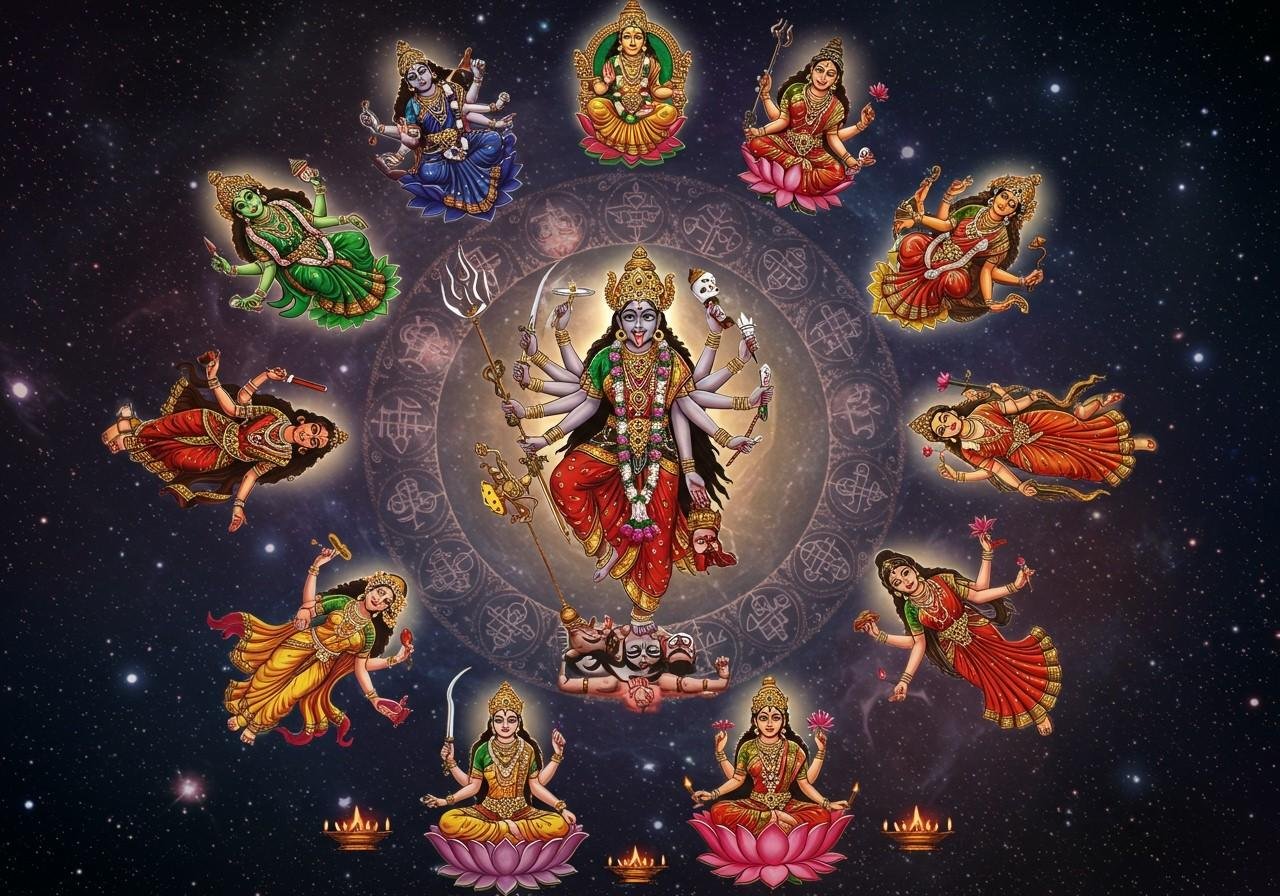
Shakti Sadhana is associated with the worship of the Divine Feminine. Goddess Kali, Durga, Tara and Tripura Sundari are important deities in different Shakta traditions.
5. Tantrik Puja and Havan
Puja and Havan are traditional forms of worship. Their procedures differ across religious schools, and their significance is understood through the teachings and beliefs of those traditions.
6. Meditation and Spiritual Discipline
Meditation, concentration, self-discipline and study are important in many Tantrik traditions. Spiritual preparation and guidance may also be required for particular practices.
Different Types of Tantrik Traditions in India
Tantra has developed through several traditions across India. Understanding these traditions helps explain why there is no single definition of a Tantrik Baba.
Shakta Tantra
Shakta Tantra centres on the worship of Shakti, the Divine Feminine. Goddess Kali, Tara, Tripura Sundari and other forms of the Goddess hold important positions in different Shakta traditions.
Shaiva Tantra
Shaiva Tantra is associated with the worship of Lord Shiva and different philosophical and spiritual traditions connected with Shaivism.
Sri Vidya Tradition
Sri Vidya is a significant Shakta tradition associated with the worship of Tripura Sundari. Its practices include mantra, Yantra and forms of ritual worship.
Kaula Tradition
Kaula is a group of Tantrik traditions with distinctive teachings and ritual practices. Its methods and interpretations vary across different lineages.
These traditions have their own histories, texts, teachers and methods. A person studying Tantra should understand the particular tradition rather than assuming all Tantrik practices are the same.
Famous Places Associated With Tantrik Practices in India
India has several important religious centres associated with Tantrik traditions and forms of Shakti worship. These places have historical and cultural importance for devotees, researchers and spiritual seekers.
1. Kamakhya Temple, Assam
Kamakhya Temple in Guwahati is one of India’s most important Shakti Peethas. It is associated with Goddess Kamakhya and has a significant place in Shakta and Tantrik religious history.
The annual Ambubachi Mela attracts devotees and visitors from different parts of India.
2. Tarapith, West Bengal
Tarapith is an important religious centre associated with Goddess Tara. It is particularly well known for its place in Bengal’s Shakta traditions and its association with Bamakhepa.
3. Kalighat Kali Temple, Kolkata
Kalighat Kali Temple is one of the most recognised temples dedicated to Goddess Kali. It is an important pilgrimage centre and has a long religious history.
4. Varanasi, Uttar Pradesh
Varanasi is a major centre of Sanskrit learning, Hindu philosophy, religious worship and spiritual study. Its history includes important contributions to the study of Tantra and other Indian philosophical traditions.
5. Ujjain, Madhya Pradesh
Ujjain is an ancient religious city associated with Lord Shiva and the Mahakaleshwar Jyotirlinga. It has a long history of religious scholarship, worship and spiritual practices.
What Does a Tantrik Baba Do?
A Tantrik Baba may be a practitioner, teacher or spiritual guide associated with a particular Tantra tradition. The exact activities depend on the person’s background, knowledge and spiritual lineage.
Traditional activities may include:
- Studying Tantrik scriptures and religious philosophy.
- Practising mantra recitation and meditation.
- Performing traditional puja and Havan.
- Worshipping particular deities according to a tradition.
- Teaching spiritual concepts and religious practices.
- Guiding students in practices permitted by their tradition.
Not every practitioner follows the same methods. The term Tantrik Baba is broad, and it is important to understand the individual’s actual tradition and experience.
How to Identify a Knowledgeable Tantrik Baba in India
People searching for a genuine Tantrik Baba should look beyond advertisements, dramatic claims and popularity. A person’s knowledge and background are more meaningful than promises of extraordinary results.
Here are some points worth considering:
1. Knowledge of Tantra
A knowledgeable practitioner should be able to explain the tradition they follow and discuss its teachings, texts and practices.
2. Understanding of Mantras and Rituals
Traditional mantras and rituals have specific meanings and methods. A practitioner should be able to explain the religious context of the practices they discuss.
3. Spiritual Background
Ask about the person’s teacher, tradition or lineage where applicable. Some Tantrik traditions place particular importance on initiation and guidance.
4. Honest Communication
A responsible spiritual guide should explain the nature of a consultation or practice clearly, including any associated costs.
5. No Unrealistic Promises
Be cautious of anyone guaranteeing supernatural results, claiming complete control over another person or pressuring you to make repeated payments.
6. Respect for Personal Decisions
Spiritual guidance should not involve threats, intimidation or pressure. People should be free to decide whether a particular practice or consultation is right for them.
Frequently Asked Questions About the Best Tantrik Baba in India
Who is the Best Tantrik Baba in India?
There is no officially recognised ranking that identifies one person as India’s best Tantrik Baba. Chandraswami is one of the most widely known modern Tantrik personalities, while Bamakhepa is an important historical figure in Bengal’s Tantrik tradition.
Who was Chandraswami?
Chandraswami, whose birth name was Nemi Chand Jain, was a famous Indian Tantrik personality who became widely known during the 1980s and 1990s. He was associated with influential political and international figures and passed away in 2017.
Why was Chandraswami famous?
Chandraswami became famous for his public association with Tantra and astrology, his connections with prominent personalities and his influence during the period when P. V. Narasimha Rao was Prime Minister.
Who was Bamakhepa?
Bamakhepa was a well-known Bengali spiritual figure associated with Tarapith and the worship of Goddess Tara. He holds an important place in Bengal’s Shakta and Tantrik religious history.
What is the difference between Tantra and Tantrik Vidya?
Tantra refers to a broad range of spiritual traditions, philosophies and religious practices. Tantrik Vidya commonly describes the knowledge and methods associated with these traditions, including mantra, Yantra, meditation and worship.
Which place is famous for Tantra in India?
Kamakhya in Assam and Tarapith in West Bengal are among the best-known religious centres associated with Shakta and Tantrik traditions. Varanasi is also an important centre of Sanskrit learning and Tantrik scholarship.
Is Chandraswami still alive?
No. Chandraswami, whose birth name was Nemi Chand Jain, passed away on 23 May 2017 in New Delhi.
Can anyone learn Tantrik Vidya?
Some forms of religious study, worship and meditation are open to interested learners. Other practices traditionally require preparation, guidance or initiation according to the specific tradition.
Final Thoughts on the Best Tantrik Baba in India
India’s Tantrik history includes many spiritual personalities, teachers and scholars. Chandraswami became one of the most widely recognised Tantrik figures of modern India because of his public profile and connections with influential personalities. Bamakhepa remains an important name in Bengal’s Tantrik history, while Gopinath Kaviraj made a significant contribution to the scholarly study of Tantra.
The question of who is the best Tantrik Baba in India does not have one universally accepted answer. Different traditions recognise different teachers and practitioners. Understanding their backgrounds, knowledge, teachings and contributions is a more meaningful way to explore the subject.
For readers interested in learning more about Tantrik traditions, Mantra Vidya, spiritual practices and related subjects, tantrikbabaji.com offers further information and an opportunity to make enquiries about the topics covered on the website.